




The American Dental Association notes that many dental problems, including cavities and gum disease, can develop without causing pain in their early stages. That is one of the biggest reasons dentists recommend routine exams even when your mouth feels perfectly healthy. A problem may be starting long before you can feel it.
Modern tools such as digital X-rays, intraoral cameras, and 3D imaging give dentists a closer look at areas that are difficult or impossible to evaluate with the naked eye. That extra detail can help catch concerns sooner, when treatment may be simpler and less invasive. In this guide, you’ll learn how these technologies work, what they can detect, and how the best dentist in Mountain View can use them to help protect your long-term oral health.
How Can Modern Dental Technology Help Detect Dental Problems Earlier?
Even the most thorough visual dental exam has its limits. A dentist can evaluate the visible surfaces of your teeth and gums, but many oral health concerns develop where they cannot be seen with the naked eye. Cavities can form between teeth, infections can develop beneath the gums, and bone loss often progresses without obvious symptoms.
Modern dental technology gives dentists a more complete picture of your oral health and plays an important role in preventive dentistry. Instead of waiting for a small issue to become painful or more difficult to treat, advanced diagnostic tools help identify changes earlier so treatment can begin when it is often simpler and more conservative.
Early detection can offer several important benefits, including:
- Treating problems before they become larger or more complicated
- Preserving more of your natural tooth structure
- Reducing the need for more invasive dental procedures
- Helping lower treatment costs over time
- Supporting better long-term oral health
These tools support comprehensive dental care by giving your dentist more information to work with when evaluating your teeth, gums, bone, and overall oral health. Different diagnostic tools reveal different details, helping your dentist decide what needs attention and how to approach your care.
What Can Digital Dental X-Rays Detect?
Digital dental X-rays are a valuable tool for cavity detection and identifying other problems that cannot be seen during a visual exam. They produce detailed images almost instantly, allowing dentists to evaluate areas beneath the surface of your teeth and gums while exposing patients to significantly less radiation than traditional film X-rays.
Digital X-rays can help detect:
- Cavities that develop between teeth
- Bone loss caused by periodontal disease
- Infections around tooth roots
- Changes beneath existing fillings or dental crowns
- Developing concerns before they become painful
Finding these issues early often allows dentists to recommend more conservative treatment before the damage progresses.
How Do Intraoral Cameras Improve Dental Exams?
An intraoral camera is a small handheld device that captures highly detailed images inside your mouth. As your dentist moves the camera around your teeth and gums, the images appear on a nearby screen, allowing you to see the same areas your dentist is examining.
These images can reveal:
- Small cracks or chips in teeth
- Worn or damaged fillings
- Areas of plaque buildup
- Early signs of gum inflammation
- Changes that should be monitored over time
Seeing your own teeth often makes it easier to understand why your dentist recommends certain treatments. It also allows you to take a more active role in decisions about your oral health.
What Can 3D Dental Imaging Show?
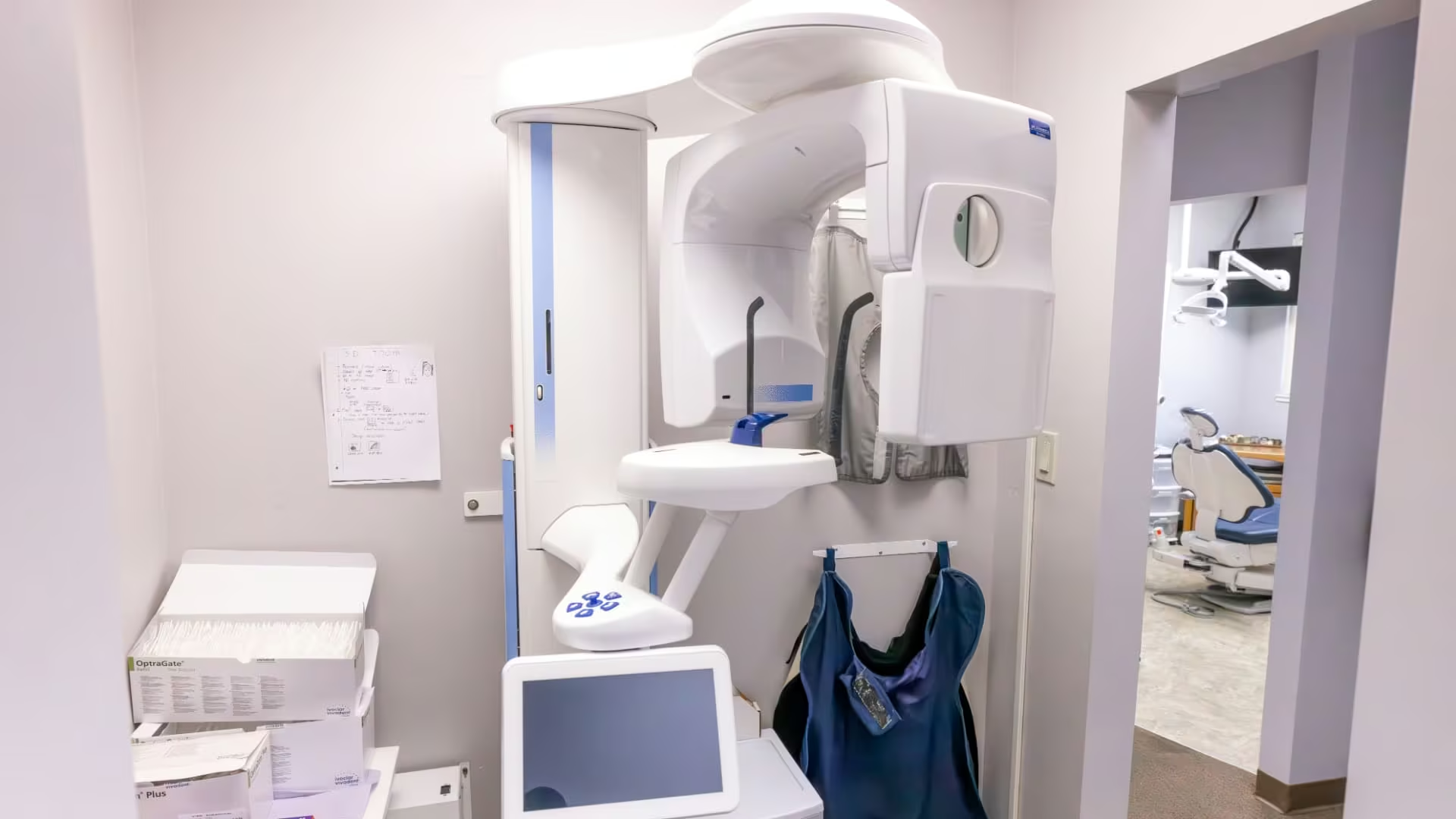
3D dental imaging gives dentists a detailed view of your teeth, jaw, and surrounding structures from multiple angles. One of the most common types is a cone beam computed tomography (CBCT) scan, which creates a three-dimensional image that can reveal details traditional dental X-rays may not capture.
Dentists may use 3D imaging to:
- Plan dental implant placement
- Evaluate impacted teeth
- Examine the jawbone and surrounding structures
- Assess complex root anatomy
- Investigate certain oral or facial concerns
Because 3D dental imaging provides such detailed information, dentists typically use it when a closer look can help guide diagnosis or treatment planning.
How Does Modern Dental Technology Improve the Patient Experience?
Detecting dental problems earlier is one of the greatest advantages of modern technology, but these tools also make dental visits more informative, personalized, and efficient. Many patients appreciate being able to better understand their oral health instead of simply hearing about it.
Technology will never replace the relationship between a dentist and their patient. Instead, it strengthens that relationship by providing clearer information, supporting more confident treatment decisions, and helping patients feel informed every step of the way.
Why Choose the Best Comprehensive Dentist in Mountain View for Advanced Dental Care?
Modern dental technology allows dentists to identify many oral health concerns before they become painful or more difficult to treat. From digital X-rays and intraoral cameras to 3D imaging, these tools provide valuable information that supports earlier diagnosis, more personalized treatment planning, and better long-term dental health. When combined with regular dental visits, they can help you stay ahead of problems and protect your smile for years to come.
At Jennifer Silvers, DDS, we pair advanced diagnostic technology with compassionate, personalized care. As a Peninsula native, Dr. Jennifer Silvers is proud to serve the community where she was raised. After serving as a dental assistant in the U.S. Army, she earned her doctorate in dental surgery from the University of the Pacific, Arthur A. Dugoni School of Dentistry, where she continues to help educate future dentists as a faculty member. She believes every patient deserves individualized care and takes pride in building lasting relationships while delivering treatment with exceptional attention to detail.
Looking for the best comprehensive dentist in Mountain View? Schedule an appointment today to experience how advanced technology and personalized care can help keep your smile healthy for years to come!




.avif)
.jpg)

.svg)


.svg)


